|
|
|
|
|




|
|

|
|
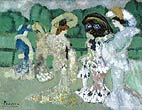

A ground-breaking work from the period of Picasso's artistic coming of age.
By William Paton
|
|
|
|
|
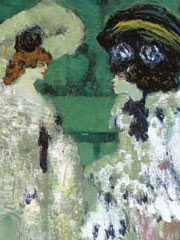
Sale 1075, Lot 23
Pablo Picasso
Les courses (detail)
Oil on cardboard
Painted in Paris, 1901
Estimate: $4,500,000-6,500,000
|
|
'This very young Spanish painter, who has been here for only a short time, is wildly enamoured of modern life. It is easy to imagine him - wide awake, with a searching eye, keen to record everything happening in the street, all the adventures of life. He does not need to contemplate his subject matter for long… we see him covering his canvas quickly, as if in a fury, impatient at the slowness of his hand, which holds long brushes laden with colour.' So wrote Gustave Coquiot, one of Picasso's first critics and most vociferous advocates, about the teenaged artist's groundbreaking 1901 exhibition at the Galerie Vollard (quoted in J. Palau i Fabre, Picasso: Life and Work of The Early Years 1881-1907, Oxford, 1981). Les courses, a fervent, colouristic depiction of ladies at the races, dates from the period leading up to the exhibition during Picasso's historic second visit to Paris and perfectly encapsulates his vigour and enthusiasm. Where Paris had earlier inspired the young artist, while preparing for the exhibition it became the main character in his art. He furiously depicted every stratum of city life, from glamorous balls to morphine addicts, from prostitutes to the races.
|
|
|

The races were a high point in the Parisian social calendar, with the newest fashions conspicuously on display. In Les courses Picasso revels in depicting the sumptuous textiles of the ladies' finery. However, eschewing the customary Impressionist treatment of equestrian themes presented by Degas, Picasso punctures the veneer of glamour - the women are pallid and haggard in contrast to their clothes, revealing an underlying sordid, sinister and predatory nature. Picasso has hijacked an Impressionist theme and infused it with his own unique understanding.
Picasso's Vollard exhibition truly marked his artistic coming of age. In both its flamboyant style and the gritty aspect brought to its subject matter, Les courses can be seen to pave the way for the Blue Period pictures Picasso embarked upon only months after the show. His confidence - also reflected in his piercing self-portraits - was growing apace as he found his own unique means of enthusiastically rendering any and every aspect of modern life, laying the foundations for the cult of personality that would accompany him throughout the rest of his career. The exuberance of his work prompted Coquiot to conclude, 'We shall be hearing more of the work of P.R. Picasso.'
WILLIAM PATON IS A RESEARCHER IN THE 20TH CENTURY ART DEPARTMENT AT CHRISTIE'S KING STREET
Back to top

|
|
|