Sale 2795, Lot 46
Jan Josefsz. van Goyen
(Leiden 1596-1656 The Hague)
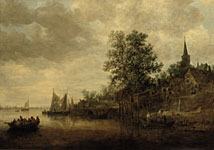
River landscape with village
indistinctly signed and dated `V....n 1643' (lower left)
oil on canvas
124.3 x 176.2 cm
Estimate: €120,000-180,000 (US$170,000-250,000)




 |
||
  illegally seized from the legendary Amsterdam gallery  some of the most extraordinary art dealers of all time, and it is into this tradition that Jacques Goudstikker falls. |
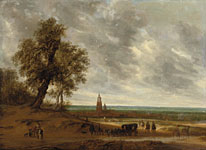
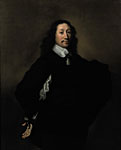
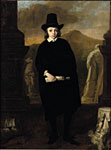
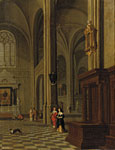
 By Damian BrenninkmeyerThe third and last of this year's auctions of paintings from the Collection of Jacques Goudstikker will take place in Amsterdam on 14 November. Christie's saleroom on Cornelis Schuytstraat is not far from where this legendary dealer's gallery was on the Herengracht 60 years ago. The added significance is the incredible journey of each painting: the remarkable story of the collection seized illegally during the war, the recovery of many of the pictures and the eventual restitution to Jacques' heirs. Although Goudstikker dealt in all European painting schools, the sale mostly concentrates on Dutch and Flemish paintings. Among the highlights are two beautifully preserved landscapes by the pioneers of the 'tonal' school - Jan van Goyen and Salomon van Ruysdael. River landscape with a village, dated 1643, illustrates van Goyen's characteristically limited palette, predominately employing shades of brown and green to achieve an atmospheric effect. (fig. 1  ) Landscape with riders near Amersfoort by van Ruysdael shows a panoramic landscape with a low horizon that reveals the wide expanse of the Netherlands. In the middle distance lies Amersfoort with the distinctive tower of the Onze Lieve Vrouwekerk, known locally as the Lange Jan (Long John). fig. 2 ) Landscape with riders near Amersfoort by van Ruysdael shows a panoramic landscape with a low horizon that reveals the wide expanse of the Netherlands. In the middle distance lies Amersfoort with the distinctive tower of the Onze Lieve Vrouwekerk, known locally as the Lange Jan (Long John). fig. 2 The affluent Dutch 17th-century merchant classes are represented by a pair of impressive portraits by the Amsterdam-based painter Hendrick Gerritsz. Pot. (fig. 3) The formality of the poses and richness of clothes are testimony to the great wealth these sitters had accumulated. This success allowed subsequent generations to embark on more pleasurable pursuits. For example, the young man in Thomas de Keyser's portrait is shown holding a piece of parchment and surrounded by antiquities evoking the Grand Tour. The sculpture behind to the right is the famous Farnese Hercules, which would have been widely known in Northern Europe from engravings by artists such as Hendrik Goltzius. fig. 4 Gerard Houckgeest's Interior of a church (fig. 5) is one of the earliest examples of the Delft School's more naturalist style of architectural painting. In contrast to that of his master, Bartholomeus van Bassen, Houckgeest's style shows a more colourful palette, post-1650.Damian Brenninkmeyer is department head of Christie's Old Master Pictures, Amsterdam |
  |
